|
skip to main |
skip to sidebar

Many are entranced by harmony, the in & out of the music. So to speak.But there's more to it than a techinique- it's THE MELODY. How you phrase it and the message.
I note with extreme interest, that to get to a level of a Coltrane, Miles Davis or Michael Brecker, one needs to have their melody playing as tight as possible. To many rely on what might be " required" or the peer group their in. But realistically speaking, you need MELODY to make the advanced techniques work.You need to enhance your playing with the richness of color and its subsequent emotional power to bring the listener into your story. After all, you won't be playing for your peers all your life. Right?
Learning standards, such as " Body & Soul", " Stardust", " I Can't Get Started" and so many others.In this sense I mean knowing the song without a fake book. Playing from that agenda. Of course tunes like " Soul Eyes", " Lush Life" and Strayhorn gems need chord lead sheet road maps.But the agenda of knowing standards is essential.Improvising is a bottomless pit of discovery with unending combinations,but it's useless unless you study the roots of the music. If you do not know the melody, and chords to ballads like I mentioned or worse yet songs like " All Blues" and " Tune Up" there are huge missing links within.

Without the aspect of swing, and melody the core of the tradition is not present.With out question the supremacy of melody has to be acknowledged.We all know that harmony shades and supports melody,enhancing its beauty and depth. In jazz creating a strong melody stands as a crowning achievement.

We have all remarked when an innocent child speaks their mind and reveals something candid, with no worries about consequences, failure, or judgment that makes us think. We also know there is something envious about that special quality; raw freedom to express with no fears or hang-ups. When a young student drums on a desk, draws on a paper, or sings, sincerity is at its best. And it’s all valid because it’s sincere.
Our attraction to music is a personal one. Sure, there are peer pressures, and multi musical purposes, but somewhere in our hearts we have our own musical tastes. To step forward and play what you feel might be your best move.I feel it’s tragic to not explore music and life through creativity and self development. I respect the ideal of traditional development of needed musical skills but not at the cost of creativity. No one should have to wait some undetermined amount of time to compose something or even think about composing something.Ditto with improvisation. Same with any writing or art. It’s sincere. It’s in the moment.

The path of a true "artist" is a rocky road. It's like walking up wet glass at times but after a while it's fun.It is your business to keep the channel open.You have to keep open and aware directly to the urges that motivate you.You'll note a slow emergence almost imperceptible. it will be something you never forget.
Now's the time tell a genuine story, speak the truth, and someone will appreciate it.It is part and parcel of being an artist.
Keep the channel open, and try your best.You'll learn something special.The saxophone has long been considered to be the most versatile musical instrument.The spontaneity of an artist doesn't flow from an unrehearsed consciousness. It flows because they thought about things hard and honestly, as to obtain a level of direction within their performance.
To obtain total creative control, it must be thought about, studied, listened to and internalized even more. When I heard Michael Brecker play in concert the thing that struck me was how he used changes in volume (dynamics) to great effect. Sure, he played fast, high and split notes etc BUT it was his use of dynamics that floored me. Listen to the 30 second long, almost inaudible Low B at the end of Delta City Blues. Get my drift?!? Another great example is Stan Getz, on the CD " Sweet Rain", listen to the dynamics of the entire recording. Especially " Litha". How about Coltrane on " Stardust", or Coltrane on " Lush Life" ? The majority of Trane guys never approach the Prestige / Blue Note Coltrane conceptions, just the later/modal stuff.
~ Just a quick commercial saxually speaking..about clinics-workshops and concerts.
I'm expanding my base of operations more and more. Week to week- I'm finding out that I need to get to YOUR city for performances, school concerts-clinics and so on. As I book myself, I am just letting those interested know.

Check out Jeff Coffins words about what I do ;
"Tim Price has captured my imagination on many occasions with his forward thinking arrangements and wonderfully captivating playing. He is a unique musician made more unique because he has searched and found his own voice. Truly a rare find in music."
~ Jeff Coffin
Tim Price- On the Road (Promo)
http://www.youtube.com/watch?v=YGaAWGW5gWo
EUROPE ESPECIALLY! Let me know how I can be of service? JUST ASK!!
http://www.timpricejazz.com/booking.html
I'll be talking more about ~stepping forward~ and taking your chances. Now's the time.
Thanks, and keep on your path......Tim Price

Practice: now, then and always
By Tim Price
Practice: now, then and always
By Tim Price
Today's musicians – whether students, educators, or professionals – need to strive for quality of practice. Developing a sustainable routine is really a
life-long process. Young people can function off desire and youthful animal
energy. In the long run, though, the creative person needs to find a way to
maintain a level of interest and vitality in the art. This takes work and
intelligence.
The concept of daily practice is an important one, as it is the best
way to make any kind of musical progress. Daily effort keeps players finely
attuned to continuous movement and the incremental accumulation of progress. Practicing sporadically causes you to lose the thread of your practice and is thus much less effective.
Through diligent, consistent daily work, a tangible musical
substance is developed. First of all, it is helpful to develop physical stamina through the repeated effort. Also, from day to day, students will accumulate ideas and expand on the themes of their practice. On a topic like working Major chords; the first day might be devoted to arpeggios, and the next day might be finding some connections to other musical sources or songs. By continuing to work with focus on the same things from day to day, students will find their level of proficiency rising and expanding to include all these other sources.
Practicing every day results in the acquisition of technique, musical
intelligence, improved tone, and stamina. Just the quest to continuously find something to practice will increase a musician’s creativity.
There are so many variations of scales, melodies, and melodic
patterns. The only real limitations are determined by focus and creativity.
For example: let's say that you have adequately practiced your horn and now want something else to work on. You could sit down at the piano and transcribe a song, learn a song by ear that you may have previously learned by wrote. This, is one of the most beneficial practices you can do. Ear training, learning songs, listening to other players, hearing bass lines or melodies. Ok. Now you've spent a few hours and learned a tune the way its supposed to be played.
You know the tune inside and out, in essence a great organizational mind skills study too. However your mind works. Don't overload – otherwise nothing sticks.
Your capacity will increase after you have spent more and more time. It's
amazing how connections are made, they seem to occur in a fashion which is beyond the conscious ability to plan and organize.
Daily practice also allows me to imprint the material in my mind
until it becomes instinct. One long practice session will not do this. For most players, useful techniques can only be acquired through repetition. I always try to work new materials into songs, lines and grooves that I like. For me it's sort of like upgrading my musical mind so that my playing becomes reoriented in
the directions I choose. Increasing familiarity with the materials is a good
thing. It's like learning a language – music is a language.
Go Long Long tones should be the most important part of your practice routine. This fact is surprising to many beginner or intermediate saxophonists.
Why Go Long? Every saxophonist, clarinetist, flute, oboe and bassoon player needs this.
Long tones help you develop muscles and skills that are extremely important in
most playing situations:
• Embouchure. If the embouchure is correct throughout all of the long tones,
then you will feel the burn as you reach the high notes. Make sure to really
squeeze the corners in the high notes, and do not bite. If you feel the biting,
stop, rest for a little while, and then continue when you feel ready.
• Tonal quality. By playing long tones, you become subconsciously aware of the overtones and can develop a finer tone quality.

How to Practice
Long tones should be practiced the following way:
1. Begin with low Bb and play this note at a piano volume the best you can for 10 seconds.
2. If you need to, use a metronome and set it to 60 beats per minute.
3. Go up chromatically and play each note in the range of the instrument. With correct lower lip and breath support as well as well-developed control of the muscles involved, you should be able to keep the intonation even.
4. Be conscious of tone quality, intonation, breath support and embouchure.
5. Use a mirror to see your embouchure. Long tones must be practiced for about
15 minutes at a time. In the first session, start at low Bb and ascend to the highest note you can play correctly. In the second session, start at the highest note you can play correctly, and descend to low Bb. Try your best to practice long tones as much as you can.

THE 7 DAY PLAN
This will help woodwind focus, and it’s easy too. Each day of the week choose one subject and work on it all day long. Pick your weak areas. A typical week might look something like this plan below :we want to equip ourselves with the right outlook. Write down realistic plans to improve your goals. This will develop a focus on what you are trying to accomplish. No matter what level your at as a musician.
Monday: Just play, all day. Letting go, feeling your way up and down the sax, checking out the sound. Have fun and listen to your strong points. This usually starts out being abstract and works its way into more melodic playing. Doing this all day gives us plenty of time to really get the idea of the exercise.
Write down notes to yourself on what you want to work on that week; then during the week approach your ideas one by one.
Tuesday: Melodic playing. Today start to put two or more notes together that sound 'pretty'. Take a look at your REAL BOOK/ or any book of songs, and notice how some of the great tunes are made up of simple intervals. Some of them are short scale passages. This gives us a clue that it does not take much to write or play a good melody. Write at least one idea down a day, and it will help you to think melodically and will add more substance to any style.No matter what
level your at. Wednesday: Quality over quality. What do you feel you need to make stronger?
Take today and study it. Make friends with the area of your playing that needs more focus. As your thirst to improve grows add this Wednesday topic to your other days. Practice scales, licks, study other players styles on CD's.
Thursday: New melodies and new chords. This day we take some of the melodies created on Tuesday and put them together. Don't judge your new pieces but keep trying until you find something you like. Remember you have all day to come up with something that makes you feel good. If you write two bars you are a big winner. Also, try to take the new chords and use them in some of the tunes you know. Or make up your own progressions with them. You are being creative this
day. Be yourself, not someone you read about.
Friday: Listen to music all day long, new and old CD's. Get inspired and make notes of the players' style, how they phrase, keep time, how they let space and silence become part of their solos. Can you remember a few ideas that you can play? Be eclectic! Listen to rock, jazz, classical, world music or spoken word.
Be inspired this day. It's your day!
Saturday: What caught your musical ear? Was there something this week that made you think differently? This is the day to investigate further and go deeper
into that . Try to understand what moves you. If it caught your fancy, stick
with it until it reveals itself to you. This day may change your life! Document this feeling you have. It is important for your future.
Sunday: Review in your mind,think about the week of practice. Review things slowly- listen for improvements. Remember, intuition is your very best friend.
Listen to it and be ready to act on it. If it sounds good, remember how you
worked and focused on it to get it to that point.
Arrange your seven days your own way. Add subjects that you love. Add new directions from time to time. Go slowly, enjoy the journey and grow within your own ideas. It helps to have a plan for the week, keep it loose like this so it can grow-for you. It will take a certain amount of pressure off and allows you to relax as you practice. Focus today so tomorrow your closer to your goals.
Thank you and hope this helps everyone- Think creative. Tim Price

* Tim Price - Professional musician- educator- author -recording artist.Selmer clinician and Rico Reeds, Theo Wanne artist.
In addition to giving private studio Tim has taught students from Tokyo and Texas to Tel-Aviv using on line instruction via SKYPE.
One of the most in demand educators today- He teaches in NYC and Reading, Pa. Workshops and Clinics worldwide. His books are published through Hal Leonard. * @Price Music 2013-Allrights.

This weeks RICO BLOG will help woodwind focus, and it’s easy too. Each day of the week choose
one subject and work on it all day long. Pick your weak areas. A typical week
might look something like this plan below :we want to equip ourselves with the
right outlook. Write down realistic plans to improve your goals. This will
develop a focus on what you are trying to accomplish. No matter what level your
at as a musician.

Monday: Just play, all day. Letting go, feeling your way up and down the sax,
checking out the sound. Have fun and listen to your strong points. This usually
starts out being abstract and works its way into more melodic playing. Doing
this all day gives us plenty of time to really get the idea of the exercise.
Write down notes to yourself on what you want to work on that week; then during
the week approach your ideas one by one.
Tuesday: Melodic playing. Today start to put two or more notes together that
sound 'pretty'. Take a look at your REAL BOOK/ or any book of songs, and notice
how some of the great tunes are made up of simple intervals. Some of them are
short scale passages. This gives us a clue that it does not take much to write
or play a good melody. Write at least one idea down a day, and it will help you
to think melodically and will add more substance to any style.No matter what
level your at.
Wednesday: Quality over quality. What do you feel you need to make stronger?
Take today and study it. Make friends with the area of your playing that needs
more focus. As your thirst to improve grows add this Wednesday topic to your
other days. Practice scales, licks, study other players styles on CD's.
Thursday: New melodies and new chords. This day we take some of the melodies
created on Tuesday and put them together. Don't judge your new pieces but keep
trying until you find something you like. Remember you have all day to come up
with something that makes you feel good. If you write two bars you are a big
winner. Also, try to take the new chords and use them in some of the tunes you
know. Or make up your own progressions with them. You are being creative this
day. Be yourself, not someone you read about.
Friday: Listen to music all day long, new and old CD's. Get inspired and make
notes of the players' style, how they phrase, keep time, how they let space and
silence become part of their solos. Can you remember a few ideas that you can
play? Be eclectic! Listen to rock, jazz, classical, world music or spoken word.
Be inspired this day. It's your day!

Saturday: What caught your musical ear? Was there something this week that made
you think differently? This is the day to investigate further and go deeper
into that . Try to understand what moves you. If it caught your fancy, stick
with it until it reveals itself to you. This day may change your life! Document
this feeling you have. It is important for your future.
Sunday: Review in your mind,think about the week of practice. Review things
slowly- listen for improvements. Remember, intuition is your very best friend.
Listen to it and be ready to act on it. If it sounds good, remember how you
worked and focused on it to get it to that point.
Arrange your seven days your own way. Add subjects that you love. Add new
directions from time to time. Go slowly, enjoy the journey and grow within your
own ideas. It helps to have a plan for the week, keep it loose like this so it
can grow-for you. It will take a certain amount of pressure off and allows you
to relax as you practice. Focus today so tomorrow your closer to your goals.
Thank you and hope this helps everyone- Think creative. Tim Price

Tim Price - Professional musician- educator- author -recording artist.Selmer
clinician and Rico Reeds artist.
In addition to giving private studio Tim has taught students from Tokyo and
Texas to Tel-Aviv using on line instruction via SKYPE.
One of the most in demand educators in New School University and New York Jazz
Workshop.
He is in the vanguard of education, in demand clinician, author and one of the
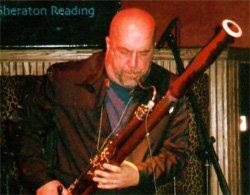
innovators of jazz bassoon. www.timpricejazz.com
 SOUND AND BUILDING A BETTER SOUND....
Long tones should be the most important part of your practice routine. This fact is surprising to many beginner or intermediate saxophonists.
Why Go Long?
Long tones help you develop muscles and skills that are extremely important in most playing situations:
• Embouchure. If the embouchure is correct throughout all of the long tones, then you will feel the burn as you reach the high notes. Make sure to really squeeze the corners in the high notes, and do not bite. If you feel the biting, stop, rest for a little while, and then continue when you feel ready.
• Tonal quality. By playing long tones, you become subconsciously aware of the overtones and can develop a finer tone quality.
How to Practice
Long tones should be practiced the following way:
1. Begin with low Bb and play this note at a piano volume the best you can for 10 seconds.
2. If you need to, use a metronome and set it to 60 beats per minute.
3. Go up chromatically and play each note in the range of the instrument. With correct lower lip and breath support as well as well-developed control of the muscles involved, you should be able to keep the intonation even.
4. Be conscious of tone quality, intonation, breath support and embouchure.
5. Use a mirror to see your embouchure. Long tones must be practiced for about 15 minutes at a time. In the first session, start at low Bb and ascend to the highest note you can play correctly. In the second session, start at the highest note you can play correctly, and descend to low Bb. Try your best to practice long tones as much as you can.

Hope this helps- Tim Price
 - I believe in the power and importance of study in music, and education in the grand scheme of a players development. I am passionate about piano study- young players need to make it their business. It will convey knowledge, spread ideas, and can transport you into alternate lives and worlds on the bandstand, improvising and more. It's why I'm working so hard to help people develop more and get more out of playing chords, progressions and on piano. 
As a jazz musician and educator, I have many jazz books and each has its merits.In these four piano study's I went for the straightforward,logical and visually interesting presentation of essential information.Much of the content of these is pertinent to any instrumentalist getting into jazz. On these tensions, voice leading are the topic of the day on II-V chords. Hope this helps.


~ Work, play and study these.This deals exclusively with how to play piano voicings---the chord technique used by Bill Evans, Barry Harris, Cedar Walton, McCoy Tyner,Horace Silver and many other jazz piano greats. Last but not least- Listen to Horace Silver. Get all his CDs, study how he wrote his tunes, listen to the connect in the sax and trumpet. You'll learn a lot. Horace is a master that you got to study. Till next week- keep practicing, eating good stuff and don't forget to play the blues on your gigs. - TIM PRICE


- - - HEY NOW...Tim Price Bloggin' for Rico Reeds,,,,with a holiday bonus blog!PIANO...for saxophonists. ( and instrumentalists that play jazz.)This is a blog about piano voicing in jazz, and pop, for the non-pianist to better understand the function and harmony of the music.If you're a non-pianist musician looking to understand the basics of Jazz piano - this is for you.Here are two simple voicings,though II-V-Is in all keys.I developed this as the text for a basic one-semester course for music majors, and if you work at this every day, within four months you'll be able to comp off a lead sheet with confidence, and comp II-V chords with your students for instruction. This is not all inclusive- it is the tip of the iceberg.Try these, and part 2 is on it's way next week.


AND SOME ALTERATIONS TO THE V7 Chord ; ; ; ;


Listening assignment ; Go to you tube, study these pianists. Now.
Art Tatum , Mary Lou Williams , Duke Ellington, Count Basie, Thelonious Monk , Bud Powell , Red Garland, Bill Evans , Ahmad Jamal ,Wynton Kelly, Sonny Clarke,Dave McKenna, Phineas Newborn , Lennie Tristano, McCoy Tyner, Herbie Hancock , Chick Corea ,Marian McPartland , Joanne Brackeen , Stanley Cowell , Hal Galper,Mike LeDonne, This is the mini-list I could go on for days- But go to you tube, LISTEN TO THESE MASTERS. Listen to the comping behind soloists. The way they use that! Study, listen and absorb.

MORE COMING, PART 2 IS ON IT'S WAY....this will help you in the most basic way. Thanks- Tim Price


- HAPPY 80th BIRTHDAY WAYNE SHORTER- Thank you for a retreat from reality.

- Wayne Shorter is one of the few musicians who can create a larger-than-life experience through the combined forces of exceptional music, a beautiful instrument, and uncommonly facile communicative skills. Charles Lloyd, Benny Golson and Lew Tabackin immediately come to mind as well. All RICO artists by the way. If I was a producer- I would have had Wayne Shorter and Monk record together, that would have been an adventure. In his performances Wayne Shorter creates transcendent masterpieces in time, space and sound and finds a perfect balance between a romantic, rhapsodic interpretations. To immediately appreciate the very resonant sound that emphasizes what is Wayne Shorter, be it his soprano playing or tenor is one of life’s pleasures.

Wayne Shorter is one of the real major sax players. But it's the combination of playing and composing that makes him one of the greatest of all times. I’m going to talk about something you might know of- but also I urge all to immediately check out. Listen and study. A few recordings that are classic.

Here they are- 'Speak no evil' together with 'Adams apple' and 'Schizophrenia' you will get a perfect idea of Shorter’s early work and his huge talent. In my opinion these albums are a must in understanding the evolution of jazz. 'Speak no evil' is about composition. The five artists play in service of the compositions. It is about the carpet of sound and not the individual qualities. There's room for space and melodic poetry. This new approach is to be followed up for decades. It is the first solo album of Shorter without the Coltrane band The second album is Schizophrenia. The liner notes explains the title as 'a retreat from reality'. Shorter finds new paths and that would make him a split-personality in a time where people are used to stay on the same course. All the six players follow this new course and all find themselves more than capable. The music is soulful and more important it is funky. Shorter playing is often compared with Coltrane. His qualities put him next to Coltrane, Rollins and Parker. But in doing so, there is another category, Wayne Shorter. 'Adam's apple' is the third great album of Wayne Shorter. With a lot of Miles Davis Quintet experience Shorter makes his best album. The compositions are (again) all beautiful, but it is the power in the playing that makes the album. It is full, sentimental, drama, spacious and often surprising. And, mind you, this is only a quartet playing! Juju is one of the most important recordings for me, and I would think everyone who takes the time to listen. This album is Wayne's first in a long series of classic recordings for the Blue Note label. In trying to put this session in perspective with his other mid-sixties recordings as a leader, I find that Wayne has not yet fully developed and presented his compositional skills. While "Night Dreamer" exhibits some fine performances by all, his second Blue Note, "JuJu", combines equally fine performances as well as some of Wayne's most notable compositions. His third Blue Note offering, "Speak No Evil" is very strong compositionalllty, in a category of it’s own.Recorded in April, 1964, this session features Lee Morgan (trumpet), McCoy Tyner (piano), Reggie Workman (bass) and the incomparable Elvin Jones on drums. The rhythm section of McCoy, Reggie and Elvin had worked extensively together in John Coltrane's quartet, and Wayne and Lee as front men for Art Blakey's Jazz Messengers. Besides the long-standing relationships, these five jazz giants recorded many sessions in various combinations throughout the early sixties. That is not to say that the communication skills they must have developed are too obvious in this recording. They don't always seem to weave the same color and texture of fabric as we might expect.

- Night Dreamer - A simple, relaxing piece in 3/4 time. Wayne is typically expressive, and Lee is clean and sharp. McCoy's solo searches for but never finds a groove. Wayne takes us out with another equally revealing, gritty improvisation. Elvin provides his typical vigorous and strong presence. Oriental Folk Song - Nothing Oriental about this tune, a relaxed 4/4 swing number with a simple head. Wayne is short and sweet, but not one of best solos. Virgo - A gorgeous Wayne ballad. Wayne's sound throughout is rich, eloquent and his notes soulful, yet optimistic. Reggie and McCoy's accompaniment is mature and sensitive, as is Elvin's brush work. Virgo (alternate take) - Even more passionate than the primary take. I preferred this one. Absolutely wonderful. Black Nile - Finally, has earned him the renown as one of great jazz composers of his time. The head features Wayne and Lee harmonizing in a spirited, energetic tempo. Wayne takes honors and digs real deep. Lee follows, and cooks behind some of Elvin's most explosive and inspirational drumming of the session. McCoy follows with one his best solos of the date. Elvin cleans up with a nice solo, then out.Charcoal Blues - A simple, yet interesting blues head followed by a rich, bluesy Wayne solo that creeps outside at the end, yet it really works, despite the blues changes lurking behind him. McCoy follows suit and pounds out a blues solo in his typical chromatic style, which works equally well. Armageddon - Wayne’s finest composition of the album - haunting and provocative. There is no question that every student of music, not just jazz or saxophone, should listen to these works. Study them deeply and let the unique frame of mind, and creative zenith wash over your soul. What Mr. Shorter has created in this music is as is as important as Strayhorn and Bach as well as via mind set and brilliance Leonardo da Vinci, Michelangelo, Galileo Galilei as well. Think about it- you’ll get my point of view. One enhances the other. Vastly empowered and limitless in his capacities for development, and embracing all knowledge and capacities as fully as possible. A modern day polymath and universal genius, listen and observe.

Wayne is best appreciated by hearing the varied approaches of the many great recordings he made as well from his early years with Art Blakey to Miles and Weather Report. It’s a life long remarkable demonstration of artistry- nothing like it in this life. To me, there is endless beauty, ideas and always brilliantly played and deeply expressive, the man is a treasure, a stunning and inspiring human being blazing a path every time he writes, plays or talks. Happy 80th Wayne Shorter, and thank you sir for a retreat from reality.

- Go to you tube- listen to WAYNE SHORTER, Chief Crazy Horse - http://www.youtube.com/watch?v=PC4qhVvSPMk // Wayne Shorter - Adam's Apple -http://www.youtube.com/watch?v=esPaveeO9ME // Wayne Shorter, "Ruby and the Pearl"- http://www.youtube.com/watch?v=bhY5V7Z9oco // Wayne Shorter Quartet - Zero Gravity/ Lotus 2010 -http://www.youtube.com/watch?v=lTQMj4180CM......DON'T STOP THERE- HEAR HIM LIVE AS MUCH AS YOU CAN.....Thank you Mr Shorter- TIM PRICE
|
|
 Many are entranced by harmony, the in & out of the music. So to speak.But there's more to it than a techinique- it's THE MELODY. How you phrase it and the message.
I note with extreme interest, that to get to a level of a Coltrane, Miles Davis or Michael Brecker, one needs to have their melody playing as tight as possible. To many rely on what might be " required" or the peer group their in. But realistically speaking, you need MELODY to make the advanced techniques work.You need to enhance your playing with the richness of color and its subsequent emotional power to bring the listener into your story. After all, you won't be playing for your peers all your life. Right?
Learning standards, such as " Body & Soul", " Stardust", " I Can't Get Started" and so many others.In this sense I mean knowing the song without a fake book. Playing from that agenda. Of course tunes like " Soul Eyes", " Lush Life" and Strayhorn gems need chord lead sheet road maps.But the agenda of knowing standards is essential.Improvising is a bottomless pit of discovery with unending combinations,but it's useless unless you study the roots of the music. If you do not know the melody, and chords to ballads like I mentioned or worse yet songs like " All Blues" and " Tune Up" there are huge missing links within.
 Without the aspect of swing, and melody the core of the tradition is not present.With out question the supremacy of melody has to be acknowledged.We all know that harmony shades and supports melody,enhancing its beauty and depth. In jazz creating a strong melody stands as a crowning achievement.
 We have all remarked when an innocent child speaks their mind and reveals something candid, with no worries about consequences, failure, or judgment that makes us think. We also know there is something envious about that special quality; raw freedom to express with no fears or hang-ups. When a young student drums on a desk, draws on a paper, or sings, sincerity is at its best. And it’s all valid because it’s sincere.
Our attraction to music is a personal one. Sure, there are peer pressures, and multi musical purposes, but somewhere in our hearts we have our own musical tastes. To step forward and play what you feel might be your best move.I feel it’s tragic to not explore music and life through creativity and self development. I respect the ideal of traditional development of needed musical skills but not at the cost of creativity. No one should have to wait some undetermined amount of time to compose something or even think about composing something.Ditto with improvisation. Same with any writing or art. It’s sincere. It’s in the moment.
 The path of a true "artist" is a rocky road. It's like walking up wet glass at times but after a while it's fun.It is your business to keep the channel open.You have to keep open and aware directly to the urges that motivate you.You'll note a slow emergence almost imperceptible. it will be something you never forget.
Now's the time tell a genuine story, speak the truth, and someone will appreciate it.It is part and parcel of being an artist.
Keep the channel open, and try your best.You'll learn something special.The saxophone has long been considered to be the most versatile musical instrument.The spontaneity of an artist doesn't flow from an unrehearsed consciousness. It flows because they thought about things hard and honestly, as to obtain a level of direction within their performance.
To obtain total creative control, it must be thought about, studied, listened to and internalized even more. When I heard Michael Brecker play in concert the thing that struck me was how he used changes in volume (dynamics) to great effect. Sure, he played fast, high and split notes etc BUT it was his use of dynamics that floored me. Listen to the 30 second long, almost inaudible Low B at the end of Delta City Blues. Get my drift?!? Another great example is Stan Getz, on the CD " Sweet Rain", listen to the dynamics of the entire recording. Especially " Litha". How about Coltrane on " Stardust", or Coltrane on " Lush Life" ? The majority of Trane guys never approach the Prestige / Blue Note Coltrane conceptions, just the later/modal stuff.
~ Just a quick commercial saxually speaking..about clinics-workshops and concerts.
I'm expanding my base of operations more and more. Week to week- I'm finding out that I need to get to YOUR city for performances, school concerts-clinics and so on. As I book myself, I am just letting those interested know.
 Check out Jeff Coffins words about what I do ;
"Tim Price has captured my imagination on many occasions with his forward thinking arrangements and wonderfully captivating playing. He is a unique musician made more unique because he has searched and found his own voice. Truly a rare find in music."
~ Jeff Coffin
Tim Price- On the Road (Promo)
http://www.youtube.com/watch?v=YGaAWGW5gWo
EUROPE ESPECIALLY! Let me know how I can be of service? JUST ASK!!
http://www.timpricejazz.com/booking.html
I'll be talking more about ~stepping forward~ and taking your chances. Now's the time.
Thanks, and keep on your path......Tim Price