|
skip to main |
skip to sidebar
 DEALING WITH REEDS.....
Reed quality is important when playing and is important in its interaction with the mouthpiece. Along with breath support and embouchure, it is responsible for pitch control and the quality of the sound produced.
The fibers running through the length of a reed create the high partials in a sound. If there are excessive fibers, they may contribute to an edgy sound, or poor quality of sound. So, the pith between the fibers slightly dampens the high partials, but if excessively pithy, the sound may be somewhat "fuzzy."
Many other factors contribute to the quality of sound produced by a reed, including the maturity of the cane. This is indicated by the color of the reed. Cane is seasoned for two to three years after it is cut and must have reached maturity, but not entered its natural state of decay. The amount of seasoning of the cane and the shape and dimensions of the reed also contribute to the quality of sound.
Choosing a good reed takes practice and experience. Comparing the grain of your favorites reeds against ones that don't play as well, and looking for differences, is a good start. When purchasing reeds, check that the color of the reed is a golden yellow color. Look for obvious flaws in the reed such as chips or splits on the tip. Hold the reed up to the light and look for a reasonably well-defined heart. The grain should be relatively even throughout.
Every four to six weeks, replenish your supply of new reeds. One approach that most can afford is to buy one or two boxes every month. Get in the habit of doing this; make it a regular routine. Date the boxes when you receive them; then store them. Use your oldest reeds first; your newest reeds go to the back of your personal supply. Never again will you have to order reeds in a panic, only to discover your supplier is out of stock.
Select and prepare new reeds regularly. Many players look for a good reed only when they desperately need one. Then, panic happens. The result: you won't find one. A better approach is to be in the routine of regularly trying and adjusting new reeds. Keep six to eight working reeds on hand. Routinely eliminate those that no longer play well; add in new ones that are acceptable to you. Do this even if you have no performances scheduled--you want to be in the habit of maintaining a supply of good reeds. Once every week or so, eliminate the poorest reed, and add a new one that seems to have potential. Note: "eliminate" does not necessarily mean "throw away." You can deselect a reed from your current group of six to eight preferred reeds, and store it for later re-evaluation. It may play better in six months, when the season--and humidity--changes.
Rotate the reeds you play on. You will lose some of the flexibility of embouchure so necessary to successfully performing on a variety of reeds. Rotate your reeds in the course of a day's practice; practice on two or three reeds instead of just one.
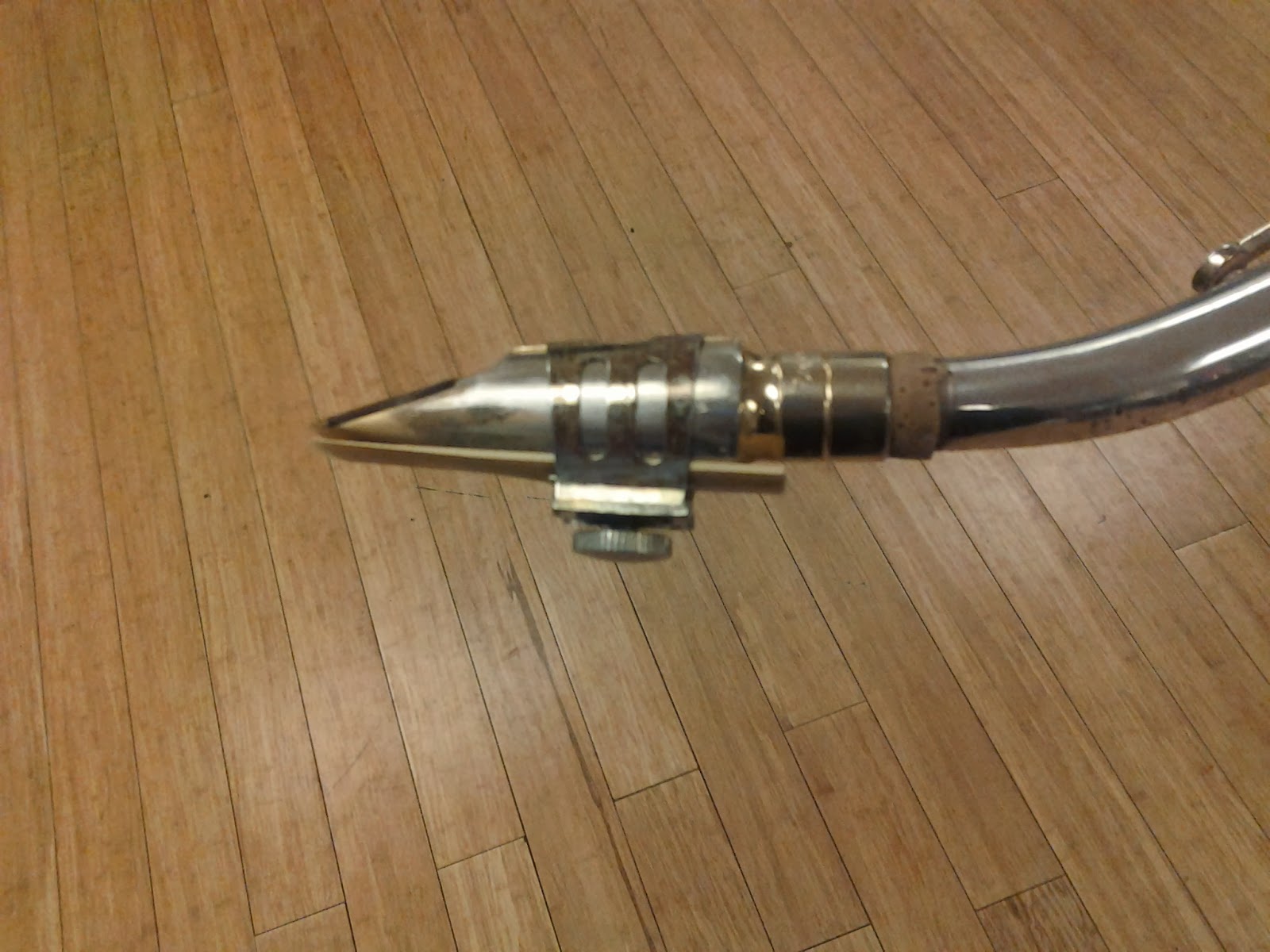
Find a reed's best playing position on the mouthpiece. Each reed has an ideal position on the mouthpiece. Sometimes, a slight change in the positioning of a reed on the mouthpiece can have a dramatic effect on how it responds.Also try moving the tip of the reed slightly to the left, or right; this subtle angling of position can offset an imbalance in the reed and cause it to become significantly more responsive.
Storing your reeds. A storage container should do more than simply protect the reed from damage. A good storage system will minimize reed warpage by reducing variations in humidity, allowing little or no exposure to outside air. Thus, make certain the reed container has good closure. To eliminate mold, some containers have salt and/or carbon granules present. The storage device should also minimize potential warpage by allowing the air inside the reed case to contact both the top and bottom surfaces of the reed. Air naturally contacts the top surface of the reed, but what about the bottom? In many reed cases, this is accomplished through use of a grooved surface, upon which the reed rests. Thus, both the top and bottom of the reed is in contact with air, promoting a uniform drying process. If only the top surface (i.e., the vamp) of the reed contacts the air, it dries at a different rate than the bottom surface, and the reed warps.
Rejuvenating an older reed. Well-used reeds can possess a build-up of material which clogs the pores and fibers of the reed. This adversely affect reed performance. Reeds in this condition can be soaked in hydrogen peroxide for a few minutes to cleanse them.
Ray Pizzi turned me on to using POLYDENT. The denture cleaner- and it works like a charm. You'll know it's working: the foaming process is easy to see. Don't expect miracles here; the reed will not be restored to a "like-new" condition. However, you can expect a few more days of reliable use after this treatment.
Always make small adjustments. Always remember: when you adjust a reed's dimensions, you are working with extremely small tolerances. Adjustments affect thickness, contour, and balance. Thickness: removal of a seemingly small amount of cane may actually represent ten, twenty, or thirty percent of its total thickness, depending upon where you are working. Therefore, changes that seem quite small are actually quite signficant. Contour: remember that your adjustment always affects the shape of the reed in two ways: the taper of the reed from the shoulder to the tip, and the convex curve of the reed from side to side. These shapes should be smooth, and free of any sudden "dips." Even the smallest break in either curve can have a negative effect. Therefore, always work with the idea in mind to preserve these two shapes. Balance: a reed is out of balance if a point on one side of the vamp is higher or lower than the corresponding point on the opposite side. You may well have to remove some cane to bring a reed into balance. However, if a reed is already balanced, the removal of cane from one side may necessitate the same adjustment on the other side.
Keep a light touch. No pressure, just the weight of the knife; just the weight of the hand if using sandpaper or reed rush. Never press. The material removed should resemble dust. Think twice before you scrape...once cane is removed, it cannot be restored. A great book to find is Kalman Oppermans book on adjusting reeds.
Get the bottom of the reed truly flat. If the bottom of the reed is warped, it will not create a true seal against the various elements of the mouthpiece, and the reed will not respond properly. To see if a reed is warped, wet the reed and lay it on a piece of glass. Gently tap one shoulder of the reed. Does it rock back and forth? If so, the bottom is warped. To reduce or eliminate the warpage, lightly sand the bottom of the reed on a file, or on sandpaper placed on a piece of glass (or plexiglass). Here's one reliable technique: wet your index, middle, and fourth fingers--this helps to hold the reed--and place them gently on the bark and vamp. Sand in a circular pattern, first clockwise, then counter-clockwise. Use three or four clockwise motions, followed by three or four counter-clockwise motions. This use of this circular technique is important, because if the reed is sanded only in one direction (say, using a repeating back and forth motion) there is a tendency to sand unevenly by creating additional pressure with the fingers at the end of the stroke. Important: Do not press. If you press, the result can be that you will actually exaggerate the warpage. While sanding, keep the reed tip off the file or sandpaper; the thinness of the tip prohibits this type of sanding. Sand only for a brief time, and then test for warpage again by laying the reed on the glass and trying to "rock" it by touching one side. With some reeds, you cannot totally eliminate warpage.
A balanced reed tip will vibrate fully, and thus realize its potential to produce sound. Here, the concept we work with is that the reed, in and of itself, produces no sound. It works in conjunction with a mouthpiece--your individual mouthpiece--to produce that sound. Therefore, the reed should be balanced through the use of a playing test. Set the reed on the mouthpiece; for convenience, you can hold it in place with your left thumb. Turn the clarinet to the side, so your lower lip closes the right side of the reed; then blow an "open G." The sound you hear is created by the left tip of the reed. Then, reverse the process: turn the clarinet so that your lower lip damps the left side of the reed. When you blow, you are hearing the right tip. Compare the sounds. Is one vibrant, the other stuffy? If so, lightly scrape the stuffy side, from the tip itself back about a quarter inch. Repeat the process. Continue this cycle until you get a good match (in clarity of sound) when you listen to each individual side of the reed's tip. Take your time...remove the tiniest amount of cane (remember, only "dust"), and then try it again. Your patience will pay off.
Try not be overly concerned with reproducing reeds to meet the exact dimensions of a model reed. This concept, while sound in theory, can yield disappointing results if relied upon too heavily. When adjusting reeds, remember: every reed plays differently, regardless of our best efforts at perfect duplication. Even if we use one of the many measuring, cutting, or grinding and sanding devices currently available, these devices can only attempt to reproduce a reed's dimensions. They cannot respond to the density of an individual piece of cane. The density of the cane has a direct effect on its ability to vibrate. Thus, two reeds of identical dimensions may play very differently from one another. This is one of the reasons why reeds from the same box can vary so much. When making fine adjustments, focus on achieving a smooth blend of the reed's two basic contours--the taper from shoulder to tip, and the convex curve from side to side--as opposed to trying to reproduce a set of specific dimensions. Look at the reed. Does it appear to have a high spot? If so, try to blend that spot into the overall contour. The elimination of a high spot can dramatically affect the reed's performance.Try the reed first. If it plays, don't do anything to it! If the reed gods of chance and good fortune hand you a fine reed, my advice is to play it! Don't change it--just add it to your selection of six to eight preferred reeds, and spend the extra time practicing.
DEALING WITH REEDS.....
Reed quality is important when playing and is important in its interaction with the mouthpiece. Along with breath support and embouchure, it is responsible for pitch control and the quality of the sound produced.
The fibers running through the length of a reed create the high partials in a sound. If there are excessive fibers, they may contribute to an edgy sound, or poor quality of sound. So, the pith between the fibers slightly dampens the high partials, but if excessively pithy, the sound may be somewhat "fuzzy."
Many other factors contribute to the quality of sound produced by a reed, including the maturity of the cane. This is indicated by the color of the reed. Cane is seasoned for two to three years after it is cut and must have reached maturity, but not entered its natural state of decay. The amount of seasoning of the cane and the shape and dimensions of the reed also contribute to the quality of sound.
Choosing a good reed takes practice and experience. Comparing the grain of your favorites reeds against ones that don't play as well, and looking for differences, is a good start. When purchasing reeds, check that the color of the reed is a golden yellow color. Look for obvious flaws in the reed such as chips or splits on the tip. Hold the reed up to the light and look for a reasonably well-defined heart. The grain should be relatively even throughout.
Every four to six weeks, replenish your supply of new reeds. One approach that most can afford is to buy one or two boxes every month. Get in the habit of doing this; make it a regular routine. Date the boxes when you receive them; then store them. Use your oldest reeds first; your newest reeds go to the back of your personal supply. Never again will you have to order reeds in a panic, only to discover your supplier is out of stock.
Select and prepare new reeds regularly. Many players look for a good reed only when they desperately need one. Then, panic happens. The result: you won't find one. A better approach is to be in the routine of regularly trying and adjusting new reeds. Keep six to eight working reeds on hand. Routinely eliminate those that no longer play well; add in new ones that are acceptable to you. Do this even if you have no performances scheduled--you want to be in the habit of maintaining a supply of good reeds. Once every week or so, eliminate the poorest reed, and add a new one that seems to have potential. Note: "eliminate" does not necessarily mean "throw away." You can deselect a reed from your current group of six to eight preferred reeds, and store it for later re-evaluation. It may play better in six months, when the season--and humidity--changes.
Rotate the reeds you play on. You will lose some of the flexibility of embouchure so necessary to successfully performing on a variety of reeds. Rotate your reeds in the course of a day's practice; practice on two or three reeds instead of just one.
Find a reed's best playing position on the mouthpiece. Each reed has an ideal position on the mouthpiece. Sometimes, a slight change in the positioning of a reed on the mouthpiece can have a dramatic effect on how it responds.Also try moving the tip of the reed slightly to the left, or right; this subtle angling of position can offset an imbalance in the reed and cause it to become significantly more responsive.
Storing your reeds. A storage container should do more than simply protect the reed from damage. A good storage system will minimize reed warpage by reducing variations in humidity, allowing little or no exposure to outside air. Thus, make certain the reed container has good closure. To eliminate mold, some containers have salt and/or carbon granules present. The storage device should also minimize potential warpage by allowing the air inside the reed case to contact both the top and bottom surfaces of the reed. Air naturally contacts the top surface of the reed, but what about the bottom? In many reed cases, this is accomplished through use of a grooved surface, upon which the reed rests. Thus, both the top and bottom of the reed is in contact with air, promoting a uniform drying process. If only the top surface (i.e., the vamp) of the reed contacts the air, it dries at a different rate than the bottom surface, and the reed warps.
Rejuvenating an older reed. Well-used reeds can possess a build-up of material which clogs the pores and fibers of the reed. This adversely affect reed performance. Reeds in this condition can be soaked in hydrogen peroxide for a few minutes to cleanse them.
Ray Pizzi turned me on to using POLYDENT. The denture cleaner- and it works like a charm. You'll know it's working: the foaming process is easy to see. Don't expect miracles here; the reed will not be restored to a "like-new" condition. However, you can expect a few more days of reliable use after this treatment.
Always make small adjustments. Always remember: when you adjust a reed's dimensions, you are working with extremely small tolerances. Adjustments affect thickness, contour, and balance. Thickness: removal of a seemingly small amount of cane may actually represent ten, twenty, or thirty percent of its total thickness, depending upon where you are working. Therefore, changes that seem quite small are actually quite signficant. Contour: remember that your adjustment always affects the shape of the reed in two ways: the taper of the reed from the shoulder to the tip, and the convex curve of the reed from side to side. These shapes should be smooth, and free of any sudden "dips." Even the smallest break in either curve can have a negative effect. Therefore, always work with the idea in mind to preserve these two shapes. Balance: a reed is out of balance if a point on one side of the vamp is higher or lower than the corresponding point on the opposite side. You may well have to remove some cane to bring a reed into balance. However, if a reed is already balanced, the removal of cane from one side may necessitate the same adjustment on the other side.
Keep a light touch. No pressure, just the weight of the knife; just the weight of the hand if using sandpaper or reed rush. Never press. The material removed should resemble dust. Think twice before you scrape...once cane is removed, it cannot be restored. A great book to find is Kalman Oppermans book on adjusting reeds.
Get the bottom of the reed truly flat. If the bottom of the reed is warped, it will not create a true seal against the various elements of the mouthpiece, and the reed will not respond properly. To see if a reed is warped, wet the reed and lay it on a piece of glass. Gently tap one shoulder of the reed. Does it rock back and forth? If so, the bottom is warped. To reduce or eliminate the warpage, lightly sand the bottom of the reed on a file, or on sandpaper placed on a piece of glass (or plexiglass). Here's one reliable technique: wet your index, middle, and fourth fingers--this helps to hold the reed--and place them gently on the bark and vamp. Sand in a circular pattern, first clockwise, then counter-clockwise. Use three or four clockwise motions, followed by three or four counter-clockwise motions. This use of this circular technique is important, because if the reed is sanded only in one direction (say, using a repeating back and forth motion) there is a tendency to sand unevenly by creating additional pressure with the fingers at the end of the stroke. Important: Do not press. If you press, the result can be that you will actually exaggerate the warpage. While sanding, keep the reed tip off the file or sandpaper; the thinness of the tip prohibits this type of sanding. Sand only for a brief time, and then test for warpage again by laying the reed on the glass and trying to "rock" it by touching one side. With some reeds, you cannot totally eliminate warpage.
A balanced reed tip will vibrate fully, and thus realize its potential to produce sound. Here, the concept we work with is that the reed, in and of itself, produces no sound. It works in conjunction with a mouthpiece--your individual mouthpiece--to produce that sound. Therefore, the reed should be balanced through the use of a playing test. Set the reed on the mouthpiece; for convenience, you can hold it in place with your left thumb. Turn the clarinet to the side, so your lower lip closes the right side of the reed; then blow an "open G." The sound you hear is created by the left tip of the reed. Then, reverse the process: turn the clarinet so that your lower lip damps the left side of the reed. When you blow, you are hearing the right tip. Compare the sounds. Is one vibrant, the other stuffy? If so, lightly scrape the stuffy side, from the tip itself back about a quarter inch. Repeat the process. Continue this cycle until you get a good match (in clarity of sound) when you listen to each individual side of the reed's tip. Take your time...remove the tiniest amount of cane (remember, only "dust"), and then try it again. Your patience will pay off.
Try not be overly concerned with reproducing reeds to meet the exact dimensions of a model reed. This concept, while sound in theory, can yield disappointing results if relied upon too heavily. When adjusting reeds, remember: every reed plays differently, regardless of our best efforts at perfect duplication. Even if we use one of the many measuring, cutting, or grinding and sanding devices currently available, these devices can only attempt to reproduce a reed's dimensions. They cannot respond to the density of an individual piece of cane. The density of the cane has a direct effect on its ability to vibrate. Thus, two reeds of identical dimensions may play very differently from one another. This is one of the reasons why reeds from the same box can vary so much. When making fine adjustments, focus on achieving a smooth blend of the reed's two basic contours--the taper from shoulder to tip, and the convex curve from side to side--as opposed to trying to reproduce a set of specific dimensions. Look at the reed. Does it appear to have a high spot? If so, try to blend that spot into the overall contour. The elimination of a high spot can dramatically affect the reed's performance.Try the reed first. If it plays, don't do anything to it! If the reed gods of chance and good fortune hand you a fine reed, my advice is to play it! Don't change it--just add it to your selection of six to eight preferred reeds, and spend the extra time practicing.
 Any reed work has to be practiced to experience improvement. Devote about twenty minutes a day to it; gradually, you will achieve results. And, you will still have time to get all your practicing done.
Reeds are deceptive; the feel of a reed often differs from the sound of a reed. Make sure you are listening to the reed, as well as feeling its responsiveness.
Do your reed work at the end of your practice session, rather than at the beginning. Remember: your main focus is to practice the music. Work on one or two reeds only, after your day's practicing has been completed. Spend the majority of your "shed time" practicing the instrument, as opposed to working on reeds.
Last but not least..some old school ideas here. Many players advocate a carefully laid out routine involving a cycle of wetting and drying the reeds prior to extended playing. Those players who recommend such programs most assuredly find them successful. For many years I followed such a routine, but no longer do so. I find that having six to eight reeds on hand, and rotating them--playing two or three in the course of a practice session--is, in and of itself, an effective "break-in" routine for my newer reeds.
Any reed work has to be practiced to experience improvement. Devote about twenty minutes a day to it; gradually, you will achieve results. And, you will still have time to get all your practicing done.
Reeds are deceptive; the feel of a reed often differs from the sound of a reed. Make sure you are listening to the reed, as well as feeling its responsiveness.
Do your reed work at the end of your practice session, rather than at the beginning. Remember: your main focus is to practice the music. Work on one or two reeds only, after your day's practicing has been completed. Spend the majority of your "shed time" practicing the instrument, as opposed to working on reeds.
Last but not least..some old school ideas here. Many players advocate a carefully laid out routine involving a cycle of wetting and drying the reeds prior to extended playing. Those players who recommend such programs most assuredly find them successful. For many years I followed such a routine, but no longer do so. I find that having six to eight reeds on hand, and rotating them--playing two or three in the course of a practice session--is, in and of itself, an effective "break-in" routine for my newer reeds.
 My experience tells me this: there is no "best" brand of reed. Reed Geek, Knife...use what you personally prefer. Where to adjust for specific results? I wish there was a formula, but there isn't...at least, I haven't found one that seems to work consistently.
Keep in mind. Buy new reeds routinely. Work on them regularly. Keep a set of six to eight reeds available. Rotate the reeds you play on, using two or three during a practice session. Add a new reed to the rotation every week or ten days, and eliminate the poorest one. Find the reed's best playing position on the mouthpiece. Store your reeds in a container which minimizes warp-age. If needed, give an older reed a boost by cleaning it with hydrogen peroxide.
Make small adjustments. Keep a light touch. Focus primarily on the two fundamental adjustments: make the bottom flat, and balance the tip. Devote the majority of your time to practicing ; work on reeds only about twenty minutes a day. It's what you do with those twenty minutes that can make all the difference.
THANKS- Tim Price
My experience tells me this: there is no "best" brand of reed. Reed Geek, Knife...use what you personally prefer. Where to adjust for specific results? I wish there was a formula, but there isn't...at least, I haven't found one that seems to work consistently.
Keep in mind. Buy new reeds routinely. Work on them regularly. Keep a set of six to eight reeds available. Rotate the reeds you play on, using two or three during a practice session. Add a new reed to the rotation every week or ten days, and eliminate the poorest one. Find the reed's best playing position on the mouthpiece. Store your reeds in a container which minimizes warp-age. If needed, give an older reed a boost by cleaning it with hydrogen peroxide.
Make small adjustments. Keep a light touch. Focus primarily on the two fundamental adjustments: make the bottom flat, and balance the tip. Devote the majority of your time to practicing ; work on reeds only about twenty minutes a day. It's what you do with those twenty minutes that can make all the difference.
THANKS- Tim Price

 .....Music should be central to the school curriculum because it improves children's health and wellbeing, concludes a study released today.Learning to play an instrument has a clear impact on improving intelligence.Music exerts a powerful impact on our lives and is as important for a well-rounded education as reading, writing.Fact!Learning to play an instrument has demonstrable effects on intelligence and, when children play music together, teaches them about cooperation and working together.Music helps concentration, aids relaxation and can influence moods and emotions, her study found. It can calm or arouse and help to overcome anger, despair and other powerful emotions.Instruments and playing them have been been found to help young children with language development and can aid physical coordination. Think about it- the results are in front of us for decades. Ask any professional player from Ernie Watts to Gary Burton and Arnie Krackowsky.How has music education changed my mood? Knowledge follows,inspiration and reality appear, with the best motivation being that of my soul. Because? I am prepared educationally as a person and musician. In many dimensions-from the early ages onward.
My discipline as a professional musician and educator was cultivated through practice starting in public schools.
I have been captured completely by the breath of life and I am humbled by the education presented to me through my life.
.....Music should be central to the school curriculum because it improves children's health and wellbeing, concludes a study released today.Learning to play an instrument has a clear impact on improving intelligence.Music exerts a powerful impact on our lives and is as important for a well-rounded education as reading, writing.Fact!Learning to play an instrument has demonstrable effects on intelligence and, when children play music together, teaches them about cooperation and working together.Music helps concentration, aids relaxation and can influence moods and emotions, her study found. It can calm or arouse and help to overcome anger, despair and other powerful emotions.Instruments and playing them have been been found to help young children with language development and can aid physical coordination. Think about it- the results are in front of us for decades. Ask any professional player from Ernie Watts to Gary Burton and Arnie Krackowsky.How has music education changed my mood? Knowledge follows,inspiration and reality appear, with the best motivation being that of my soul. Because? I am prepared educationally as a person and musician. In many dimensions-from the early ages onward.
My discipline as a professional musician and educator was cultivated through practice starting in public schools.
I have been captured completely by the breath of life and I am humbled by the education presented to me through my life.
 ......Aside from the social benefits, students in high school music programs have higher test scores and cognitive development. A U.S. Department of Education study found that those who reported consistent involvement in instrumental music over the middle and high school years show significantly higher levels of mathematics proficiency by grade 12.Nothard to believe is it, and the results are always fun. This observation holds regardless of students' socioeconomic status.Additionally, students who learn to play an instrument develop a greater language capacity and a greater ability to learn a new language. In another context, it is invaluable to gain a wider perspective on cultural history by being exposed to centuries of our rich cultural heritage. In my life I traveled the world and still do- it all started in 8th grade band claas in Reading, Pa.I had a fantastic band teacher- Mr. Fidler.
 ~~~ WORDS FROM LINDA TO LIVE BY ; "In the United States, we spend millions of dollars on sports because it promotes teamwork, discipline, and the experience of learning to make great progress in small increments. Learning to play music does all this and more."
- Linda Ronstadt.......from the mouth and life of a true artist as well.
~~~ WORDS FROM LINDA TO LIVE BY ; "In the United States, we spend millions of dollars on sports because it promotes teamwork, discipline, and the experience of learning to make great progress in small increments. Learning to play music does all this and more."
- Linda Ronstadt.......from the mouth and life of a true artist as well.

..... .READ THIS AND LISTEN ; http://www.gracenotescharity.org/2/post/2012/7/why-music-education-belongs-in-public-schools.html

. .."After all we ask our kids to read Shakespeare, why don't we still teach Mozart? It's the classics we aspire to not the comic book level learning that we want for our students." Samuel Hope, executive director of the National Association of Schools and Music, says that the five ways we communicate and organize thought is first in letters and words, which is our language. The second is numbers and symbols which is mathematics.Children still have the thirst for performing and teaching each other music, they show it in their ipods and other electronic devices that they carry or possess. So keeping music classes in schools seems more important than ever. Do we want superheros to inspire our children or real heros of history like Mozart and Bach? I think the answer is more simple than we think. The arts feed on each other and develop self esteem and confidence. It is also known for the development of social interaction, small and large motor skills. For instance, children can learn as a group and dancing or playing an instrument helps develop social and motor skills alike.These budget cuts are taking the opportunities to learn through different mediums right of our childrens hands. Besides not being able to teach them how to work together, like in a large group such as a music class, they don't learn simple tasks like taking turns, listening for their cue to participate and the respect of personal property, like instruments.They are missing out on developing crucial social skills. These are ALL important to their overall development. Often music classes involve such things as clapping of hands, stomping of feet, basic dancing and singing at the top of your lungs; who wouldn't have fun doing that? Some studies have shown that developmentally or physically challenged children have responded very positively to music programs and that breathing and speech disabilities improved over time. For example, using these skills in therapy, it helps to develop breathing and hand mouth coordination.Get my point? MUSIC BELONGS IN EVERY CHILD'S EDUCATION....Let's never loose that in any way. Thank you- Tim Price
 Also- please listen to a youtube I did in 2009...about education for Rico. Read the blog...then listen to our D'Addario Woodwinds channel... Music belongs in the Public Schools!
http://www.youtube.com/watch?v=4VmT6kOmTjk
Tim Price on Continuing Support of Your School's Music Prog
Thank you. . . . 

It has been my contention that the most valuable viewpoints come from those who do. Thus, it’s logical to assume that any saxist who is surviving in this field, and doing it with success, is doing something right.
The energies we all put into our craft; The years of apprenticeship and life-struggle, and the never ending open tuition to the school of hard knocks is always balanced by the intense commitment to the horn, and the pure love of playing it.

The music always has an infinite history and fertility, inexhaustible vitality, and at the same time, a seductive power of temptation - which inspires all of us who play – and offers the open-ended invitation to create as much as we can. The results, the waiting, the practicing at all hours, the talking of the music and constant study gives the music a breath of spirit, endless in motion and evolution. This will always be a source of awe and wonder to the fan or player. The legacy of the sax is a never ending landscape, at all times finite and infinite, both temporal and spiritual. The following observations, experience, gossip and serious reflection are an effort to bring you all closer to the vast dimensions of sax history, stars, life and times via the generous reminiscences of these artists.
The following artists bring a similar devotion to what the horn and it’s history is about, but all create a different picture via personal viewpoints in experiences, achievements and success. The actions and concepts that lie behind these stories will give inspiration as well as insights into a never ending life’s work and study. I wish to acknowledge the philosophies and insights of the saxists interviewed. you see, dear reader, many pros take different roads, but the basic roots are the same! This becomes more vivid as you read the interviews, and it’s why I included this section. This provides a wealth of advice and viewpoints. Enjoy all of it, and choose what works for you and apply it, and take heed to the hard-learned words of these one of a kind saxists. In closing this section, let me say, keep a hard edge on your playing, look forward to the heat and fervor of the expansiveness of the never ending saxophone. And above all, strive for tone.
 Go find CD's,youtube and hear these players ASAP- Ernie Krivda,Sam Phipps, MIKE HASHIM,Sam Morrison, Fred Lipsius, Don Wilkerson, Eric Kloss,early Wilton Felder, Tony Coe,Mike Smith,Rudolph Johnson, Tineke Postma, Hans Dulfer,Arnie Krackowsky,Ed Xiques, Kenny Berger, Peter Loeb....there's more too. Check these ;
Albert Wing http://www.youtube.com/watch?v=d6V5JZGynBg
Loren Pickford http://www.youtube.com/watch?v=h6CrUi4iuN0
Miles Donahue https://www.youtube.com/watch?v=H_jMjW9TdQw
Morris Atchison http://www.allmusic.com/album/refine...r-mw0000364403
Eric Kloss https://www.youtube.com/watch?v=JreHntGF3Vc
Joe Romano https://www.youtube.com/watch?v=yfIPXMwo5_U
Frank Lowe https://www.youtube.com/watch?v=ygpqd1BKQw0
Kenny Hing https://www.youtube.com/watch?v=MxuRHarzwEY
Bert Wilson https://www.youtube.com/watch?v=aGbLsYIxj2I
Vince Wallace https://www.youtube.com/watch?v=g_3xlfxrlSo
John Handy https://www.youtube.com/watch?v=guduVt3Xfe0
Tony Coe https://www.youtube.com/watch?v=0xcwkk2LG1c
For now- this will give you some lunch for your ears. Keep listening...Survive and remember that your main purpose IS playing music. TIM PRICE
Go find CD's,youtube and hear these players ASAP- Ernie Krivda,Sam Phipps, MIKE HASHIM,Sam Morrison, Fred Lipsius, Don Wilkerson, Eric Kloss,early Wilton Felder, Tony Coe,Mike Smith,Rudolph Johnson, Tineke Postma, Hans Dulfer,Arnie Krackowsky,Ed Xiques, Kenny Berger, Peter Loeb....there's more too. Check these ;
Albert Wing http://www.youtube.com/watch?v=d6V5JZGynBg
Loren Pickford http://www.youtube.com/watch?v=h6CrUi4iuN0
Miles Donahue https://www.youtube.com/watch?v=H_jMjW9TdQw
Morris Atchison http://www.allmusic.com/album/refine...r-mw0000364403
Eric Kloss https://www.youtube.com/watch?v=JreHntGF3Vc
Joe Romano https://www.youtube.com/watch?v=yfIPXMwo5_U
Frank Lowe https://www.youtube.com/watch?v=ygpqd1BKQw0
Kenny Hing https://www.youtube.com/watch?v=MxuRHarzwEY
Bert Wilson https://www.youtube.com/watch?v=aGbLsYIxj2I
Vince Wallace https://www.youtube.com/watch?v=g_3xlfxrlSo
John Handy https://www.youtube.com/watch?v=guduVt3Xfe0
Tony Coe https://www.youtube.com/watch?v=0xcwkk2LG1c
For now- this will give you some lunch for your ears. Keep listening...Survive and remember that your main purpose IS playing music. TIM PRICE
 Whatever it takes!
- Everyone needs to find their own road! Step forward and be the best YOU that you can be.So, without saying I have the answers here, or any revelatory answers I try to advise all students to try to start developing a clear message in their music, remaining focused and true to that message they want to convey to provide skills that enable them to work while their true passion develops and hopefully is recognized. Lean to thrive and survive.This is what we do, for better and for worse and make it a point to...do whatever it takes.

Music is the glue that holds us all together! Without music...the TV world couldn't sell a can of beer. Music is the ultimate and the most important. NOW- If you've noticed...I put a bunch of pictures of saxophonist Paul Gonsalves on this blog. Go to you tube and listen to him ok? He was one of the real amazing innovative tenor soloists in jazz...and had one of the most modern sounds ever.

Being a good musician is a life-long endeavor, and I’ve committed to spending many hours of each day working on this craft. What makes one a good musician is dedication, hard work, attention to detail, and tenacity. Also-knowing your roots and who made certain things happen in the music your involved in- Paul Gonsalves is that guy to check out this week. Do it! 
- For the playing side, try playing the blues in Db concert. Learn a few heads and melody's to get you into this key. Db concert. Get away from the same old kets and work at playing and HEARING some new keys. Can you play the melody to Body and Soul ? Without music and doing all the chords in root position? Try that to start learning a tune that EVERYONE has to know.
 TILL NEXT WEEK....Eat some healthy salads, drink plenty of water and work hard at what you love...Tim Price

 We as a music community ( jazz, pop, classical, students, rock, indy etc etc) need to get out and start supporting each other more. One of the most fascinating dimensions of this music, today is all the people involved in it. But, when I attend a concert, club gig or student recital, it's very shocking to see the empty seats. In the last few weeks, I noted with great interest that this was evident.
In short, people need to start to support each other more. From within the ranks. We are creative people, stepping out to hear a friend or a person who's trying is an asset to all of us. Listen to what the music does, not what it doesn't. We as a music community need to demonstrate that through support of arts and culture we also invest in the art form's economic well-being. Show up for a few sets.Buy the Cd's.
Take note that we need a collaborative approach to make this successful.I believe strongly that if diligently and judiciously executed,it would be of mutual benefit to everyone.Strengthen the music field and effectively recharge it from within the ranks.This is very important ! The music will grow- the musicians will foster more gigs and the scene will get stronger.
A lot of us from my generation,when we were young musicians, there was an idea that we would be playing this music,or at least some of us would be playing this as our principle means of support. Now the "night club circuit" can no longer support us
( read that as "any of us" ).
Education is the big portion of our income. We all do clinics, residencies and all the other educational components , let alone the high school or college positions or straight up private teaching. As a young player I would go to my mentors gigs and check out how he dealt with the reality of PLAYING. Even as a teenager, when I studied with my local heros like Joe Miller and Sam Correnti I learned a lot about the reality. At that point the reality was learning transposition from Joe and Sam. Joe would give me fake books to transpose, there was no REAL BOOK then, so it was good ol' VOL. 1. Plus other" bop" or swing books. Through doing that with Joe, I eventually learned to transpose at sight as a teenager. Yes Joe Miller, he was the best local jazz saxist I could of dreamed of as a teacher. He played King Super 20 saxes and had a great sound on alto and tenor, and he played RICO reeds! He turned me on as a kid to RICO brown box reeds on my Brillhardt mouthpiece. Joe was hip to Art Pepper and Bird and the cats.The baddest player in my home town-bar none for jazz. But the reality was , he also made a living playing dance gigs. He was great at it ! They played my high school prom. They played a few pop tunes " of the era" but mostly standards for dancing.
We as a music community ( jazz, pop, classical, students, rock, indy etc etc) need to get out and start supporting each other more. One of the most fascinating dimensions of this music, today is all the people involved in it. But, when I attend a concert, club gig or student recital, it's very shocking to see the empty seats. In the last few weeks, I noted with great interest that this was evident.
In short, people need to start to support each other more. From within the ranks. We are creative people, stepping out to hear a friend or a person who's trying is an asset to all of us. Listen to what the music does, not what it doesn't. We as a music community need to demonstrate that through support of arts and culture we also invest in the art form's economic well-being. Show up for a few sets.Buy the Cd's.
Take note that we need a collaborative approach to make this successful.I believe strongly that if diligently and judiciously executed,it would be of mutual benefit to everyone.Strengthen the music field and effectively recharge it from within the ranks.This is very important ! The music will grow- the musicians will foster more gigs and the scene will get stronger.
A lot of us from my generation,when we were young musicians, there was an idea that we would be playing this music,or at least some of us would be playing this as our principle means of support. Now the "night club circuit" can no longer support us
( read that as "any of us" ).
Education is the big portion of our income. We all do clinics, residencies and all the other educational components , let alone the high school or college positions or straight up private teaching. As a young player I would go to my mentors gigs and check out how he dealt with the reality of PLAYING. Even as a teenager, when I studied with my local heros like Joe Miller and Sam Correnti I learned a lot about the reality. At that point the reality was learning transposition from Joe and Sam. Joe would give me fake books to transpose, there was no REAL BOOK then, so it was good ol' VOL. 1. Plus other" bop" or swing books. Through doing that with Joe, I eventually learned to transpose at sight as a teenager. Yes Joe Miller, he was the best local jazz saxist I could of dreamed of as a teacher. He played King Super 20 saxes and had a great sound on alto and tenor, and he played RICO reeds! He turned me on as a kid to RICO brown box reeds on my Brillhardt mouthpiece. Joe was hip to Art Pepper and Bird and the cats.The baddest player in my home town-bar none for jazz. But the reality was , he also made a living playing dance gigs. He was great at it ! They played my high school prom. They played a few pop tunes " of the era" but mostly standards for dancing.

Ok- From those relationships I would know what a jazz musician was. Later with guys like Charlie Mariano, Joe Viola and Andy McGhee at Berklee School as well, and years later Sal Nistico, Stitt and Don Christlieb etc.
This is why I tell my students to attend gigs, buy Cds, listen and form bands to jam. Make it happen! Jam more, session on days your off, form "head bands" and just play.
I do tell students of the "reality in my heart and spirit" but if they don't experience it it does not mean a lot. People need to play together, get into the basement and jam!! Look at each other and say yea.

REALITY LESSON !!! Knowing_MELODYS_so people could identify and dance. A life lesson there dear reader! Knowing how to play a dance gig and survival chops to make money. Joe always said, " It beats putting cans on the wall in the supermarket ! "....I never forgot that. Plus as I said, he could blow. We did the old play alongs ( before Aebersold !! ) with the Mal Waldron trio playing those blues heads Gene Ammons recorded. Joe knew the real deal, and as I said, was the best jazz saxophonist in the city. Plus a teacher of reality. His karma paid off too, years later he won the lotto. When I came in with Charles Lloyd records trying to copy the heads like " Sombreo Sam" Joe never flinched. He was that cool.
Now Mr. Correnti, taught me flute. Another lesson in itself as today, the flute double is non-existant to a large degree. This was when I was in 10th grade in school too. Sam was cool, always dressed in a hip coat and tie. An old school swing man who knew a lot of the major players , and taught Gerry Muligan when he lived in the area. We used to get the David Gornstein books right from David, as Sam knew him. Sam also made me aware of being dressed right. I always was aware of the clothes a musician wore. REALITY of a very important kind. Plus- flute. Lots of lessons NOT in books.

That's a lot more those days of "learning vocabulary". I think that was a better way but it is not today's reality.When I started Berklee I was prepaired from Joe and Sam. Friends I met from the beginning in Boston, like Joe Lovano, Roger Rosenberg, Ross Konikoff, Jeff Lorber, Scofield, Hal Grossman/ Saxist Steve's brother, Arnie Krackowsky and Rick Wald all shared this sympatico. We could play a blues without music and also play Basie charts. THINK ABOUT THAT REALITY. ( 1969! )
This is why I tell my students to attend gigs, buy Cds, listen and form bands to jam. Make it happen! Jam more, session on days your off, form "head bands" and just play.
I do tell students of the "reality in my heart and spirit" but if they don't experience it it does not mean a lot. People need to play together, get into the basement and jam!! Look at each other and say yea.PLAY!!
Players used to network on bands and at clubs neither of which exist to any degree. Turn the TV and computer off and get in the life lane! Clubs and concerts are in need of people in the room, and listening to the music.Go and enjoy, I say " Listen to what the music does, not what it doesn't ".
It is very important that we, as musicians, come out and support each other on the scene as much as possible. I try my best to mentor my students, and anyone else in the music who approaches me with questions. It's important to also encourage students to attend their peers recitals/gigs. I did that ALL THE TIME when I was in school, that's when you actually have the time to do it! We all have a responsibility to keep it going, creating, and putting postive energy out there. I am hopeful that the economy will bounce back and we will start filling seats again too!

It's time for stronger community and a vibe that transcends money, politics, ego and anything else. This is art!
Reality. Reality can change,MUST CHANGE, that's what I'm talking about. We establish ourselves in a consciousness of perfection to step forward, not be stuck in the mud.
Musicians are _supposed to be_ connected to inner wisdom and peace.When you live with optimism you achieve optimal results
Purpose is something greater than your self. It changes who you are into who you are in to!
Motives is your destination driving wheel- this is 2012- not 1959 !
If you will it... it will BE
If you see it... you can do IT
if you hear it... you can express IT
MUSICIANS ARE CREATIVE PEOPLE TOO. MUSICIANS HAVE A HIGHER CONSCIOUSNESSES....Think about it. See ya'll next week....Support comes from within'...TIM PRICE
 Getting a vertical edge to your harmonic playing.
IF YOU WANT TO GET A MORE VERTICAL EDGE TO YOUR IMPROVISING...in fact angular and full of harmonic ideas, preferring wide intervals check this link below. It contains 13 studys I wrote on chords and intervallic ideas to open your harmonic ideas.
I did not dispense with chordal improvisations - BUT A logical way to enhance them.
http://www.timpricejazz.com/lessons/...izesOnIIVs.pdf
Tim Price Bloggin' For D'Addario Woodwinds -

Creative thinking is the process which we use when we come up with a new idea. It is the merging of ideas which have not been merged before. New ideas are formed by developing the current ones within our minds. This evolution HAS to be brought on by practice.Ongoing creative thinking is the continuous investigation, questioning and analysis that develops through education, training and self-awareness. Ongoing creativity maximizes both accidental and deliberate creative thinking. It is a quest for improvement which never ends. It is an acceptance of and a looking for continuous change that differentiates between ongoing creativity and mental inflexibility. Ongoing creativity takes time and practice to become skillful. Ongoing creative thinking soon becomes an attitude not a technique.The first step to take is to learn the creative thinking techniques so that you can use them deliberately to come up with new ideas. You will then be at an immediate advantage to those who do not know how to use them. You should then practice them to increase your skill at ongoing creative thinking. With practice you may even find it unnecessary to use specific techniques because you may soon have too many ideas without using them at all.
 
Creativity is the bringing into being something which did not exist before, either as a product, a process or a thought. Right? So let’s apply this to ALL levels of saxophone playing, thought and improvisation.
You would be demonstrating creativity if you:
· Played something which has never existed before.
· Reapply an existing lick or concept into a new area musically.
· Develop a new way of looking at something (bringing a new idea into existence).
· Change the way someone else looks at something.
We are all creative every day because we are constantly changing the ideas which we hold about the world about us and our relationship with it. Creativity does not have to be about developing something new to the world, it is more to do with developing something new to ourselves !!
When we change ourselves, the world changes with us, both in the way that the world is affected by our changed actions and in the changed way that we experience the world. It’s a thought process. It’s past a mouthpiece change..it’s a MIND SET.Some, call it conception!  

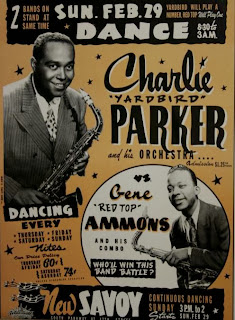
- The above picture- Is myself and Ed Berger at the Artists Quarter...in Minneapolis Minn- Ed was one of real masters and unsung. A great voice.

~2013 has come and gone rather quickly, and is the culmination of a year starts to show it's end, the year wasn't bad at all, not to shabby,numerous writing and playing projects went great, and the challenge of balancing travel/performing with teaching. This week I’m able to wind it all down with family and relaxing and catch my breath before things heat up again.The year was a good one. My band Jazz-A-Delic played Berks Jazz Festival..The band has never sounded better. Several of the members are out and about working in the greater Philly area and beyond. Mark Ammett, Randy Sutin and Sean J. Kennedy are world class players, and great friends, they all have done a wonderful job. Google their names if you will...they are not people who invented themselves when Facebook started or for the cheap thrill of seeing their face in an endorsement- they as I said- are world class musicians.
 The challenge, as is always the case, was to find the meeting place between jazz and groove music and show our roots in many musics, it is working and I am enjoying it. To me, it is one of the best bands I've lead recently. where all the genres are acknowledged in a respectful way. We will see how it all develops. We'reavailable worldwide..contact me for bookings.

~ I've also started to play with drummer Bill Goodwin in various projects.We did an excellent concert duo series at Michiko studios, that my friend Roberto Romeo produced. Roberto set this series apart and has booked some of the most unique and fresh sounds to hit NYC in a long time. Each band was different, each band carried a different message in the music. ALL...were duos.The concert at Michiko Studios was beyond words for me. To be able to be myself & create with the legendary drumming of Bill Goodwin in a environ of positive listening, attention and knowledge inspired me deeply. I'd like to thank Bill Goodwin, being the person he is. We've played in some very cool gigs together, and this one really had both of us thinking that we need to do more of this. And we will! You are a beautiful soul Bill & someone I always look forward to being in the music with. Thank you Bill. Also- huge thanks to the guys at Robertos for their tech help, assistance. Luke, Alberto ya'll rock hard- thank you. Of course the man himself Roberto Romeo. THIS CONCERT....and the duo series that is going on here is totally about the music. Which is the WAY IT SHOULD BE. Roberto knows as I do ( and hopefully you too) that the music is bigger than all of us. That's what's on my mind! Bill & I had a great time- and the vibes in the notes & tones for David S. Ware & Bert Wilson were there. Thanks to all who attended and showed real support by being there and...listening.

~ I'm also playing on a new cD with this amazing band with Sean J. Kennedy.On this new CD by Sean J. Kennedy....you can buy it at CD Baby. It has great tunes, players who are world class & I'm proud to be associated with. Check it out.The front line featured on HEY! WHERE'S MY TUX?! http://www.cdbaby.com/seanjkennedyband — with Erin Stroup, Mark Amentt, Dave Champion, John Stenger, Tim Price and Bob Wagner. Some of the best cats and great people, Sean's charts and the music is inspiring.Please check it out.

~ Also-Ernie Watts came by my home to hang in the start of October.He comes here a lot- we play music, listen to music and talk about music. I'm a lucky guy. I live in Reading, Pa- and he rents a car- when he's close and comes by.
This time he brought his sister Theora and his wife Patricia. We had some amazing spinach pies I brought from NyC, and some Italian soup I made special for the day. Inspiring and for real. as I said..THIS..Is why I play music. It's all about the music too, anything else is just...anything else. We're here to play music, keep the brotherhood going and further the music as much as we can. I've known Ernie about 28 years and we always hang like this when we are near each other. Like I said- It's about the music. 2014 STARTS THIS SATURDAY WITH... Saturday January ....1/4/ 14 ; The Lafayette Bar/ Easton, Pa-Easton, Pennsylvania 18042 ..Tyrone Brown is the bassist, and I am very fortunate to have guys like him and Bill Goodwin & Randy Sutin to inspire me in the music we play. As many might recall Tyrone was the bassist with Max Roach for the last few decades, and someone I loved on early Pat Martino records too. Add Bill Goodwin drums & Randy Sutin on vibes, Tibetan nipple gongs and the cool vibe & food at the Lafayette Bar along with my man Tunsie Jabbour great vibe and healthy food- I might play all night.....Looking forward.And...there you have it. Ciao 2013...YO 2014! Forward motion for sure! Paix et amour to everyone. ~ Tim Price...

|
|
 DEALING WITH REEDS.....
Reed quality is important when playing and is important in its interaction with the mouthpiece. Along with breath support and embouchure, it is responsible for pitch control and the quality of the sound produced.
The fibers running through the length of a reed create the high partials in a sound. If there are excessive fibers, they may contribute to an edgy sound, or poor quality of sound. So, the pith between the fibers slightly dampens the high partials, but if excessively pithy, the sound may be somewhat "fuzzy."
Many other factors contribute to the quality of sound produced by a reed, including the maturity of the cane. This is indicated by the color of the reed. Cane is seasoned for two to three years after it is cut and must have reached maturity, but not entered its natural state of decay. The amount of seasoning of the cane and the shape and dimensions of the reed also contribute to the quality of sound.
Choosing a good reed takes practice and experience. Comparing the grain of your favorites reeds against ones that don't play as well, and looking for differences, is a good start. When purchasing reeds, check that the color of the reed is a golden yellow color. Look for obvious flaws in the reed such as chips or splits on the tip. Hold the reed up to the light and look for a reasonably well-defined heart. The grain should be relatively even throughout.
Every four to six weeks, replenish your supply of new reeds. One approach that most can afford is to buy one or two boxes every month. Get in the habit of doing this; make it a regular routine. Date the boxes when you receive them; then store them. Use your oldest reeds first; your newest reeds go to the back of your personal supply. Never again will you have to order reeds in a panic, only to discover your supplier is out of stock.
Select and prepare new reeds regularly. Many players look for a good reed only when they desperately need one. Then, panic happens. The result: you won't find one. A better approach is to be in the routine of regularly trying and adjusting new reeds. Keep six to eight working reeds on hand. Routinely eliminate those that no longer play well; add in new ones that are acceptable to you. Do this even if you have no performances scheduled--you want to be in the habit of maintaining a supply of good reeds. Once every week or so, eliminate the poorest reed, and add a new one that seems to have potential. Note: "eliminate" does not necessarily mean "throw away." You can deselect a reed from your current group of six to eight preferred reeds, and store it for later re-evaluation. It may play better in six months, when the season--and humidity--changes.
Rotate the reeds you play on. You will lose some of the flexibility of embouchure so necessary to successfully performing on a variety of reeds. Rotate your reeds in the course of a day's practice; practice on two or three reeds instead of just one.
Find a reed's best playing position on the mouthpiece. Each reed has an ideal position on the mouthpiece. Sometimes, a slight change in the positioning of a reed on the mouthpiece can have a dramatic effect on how it responds.Also try moving the tip of the reed slightly to the left, or right; this subtle angling of position can offset an imbalance in the reed and cause it to become significantly more responsive.
Storing your reeds. A storage container should do more than simply protect the reed from damage. A good storage system will minimize reed warpage by reducing variations in humidity, allowing little or no exposure to outside air. Thus, make certain the reed container has good closure. To eliminate mold, some containers have salt and/or carbon granules present. The storage device should also minimize potential warpage by allowing the air inside the reed case to contact both the top and bottom surfaces of the reed. Air naturally contacts the top surface of the reed, but what about the bottom? In many reed cases, this is accomplished through use of a grooved surface, upon which the reed rests. Thus, both the top and bottom of the reed is in contact with air, promoting a uniform drying process. If only the top surface (i.e., the vamp) of the reed contacts the air, it dries at a different rate than the bottom surface, and the reed warps.
Rejuvenating an older reed. Well-used reeds can possess a build-up of material which clogs the pores and fibers of the reed. This adversely affect reed performance. Reeds in this condition can be soaked in hydrogen peroxide for a few minutes to cleanse them.
Ray Pizzi turned me on to using POLYDENT. The denture cleaner- and it works like a charm. You'll know it's working: the foaming process is easy to see. Don't expect miracles here; the reed will not be restored to a "like-new" condition. However, you can expect a few more days of reliable use after this treatment.
Always make small adjustments. Always remember: when you adjust a reed's dimensions, you are working with extremely small tolerances. Adjustments affect thickness, contour, and balance. Thickness: removal of a seemingly small amount of cane may actually represent ten, twenty, or thirty percent of its total thickness, depending upon where you are working. Therefore, changes that seem quite small are actually quite signficant. Contour: remember that your adjustment always affects the shape of the reed in two ways: the taper of the reed from the shoulder to the tip, and the convex curve of the reed from side to side. These shapes should be smooth, and free of any sudden "dips." Even the smallest break in either curve can have a negative effect. Therefore, always work with the idea in mind to preserve these two shapes. Balance: a reed is out of balance if a point on one side of the vamp is higher or lower than the corresponding point on the opposite side. You may well have to remove some cane to bring a reed into balance. However, if a reed is already balanced, the removal of cane from one side may necessitate the same adjustment on the other side.
Keep a light touch. No pressure, just the weight of the knife; just the weight of the hand if using sandpaper or reed rush. Never press. The material removed should resemble dust. Think twice before you scrape...once cane is removed, it cannot be restored. A great book to find is Kalman Oppermans book on adjusting reeds.
Get the bottom of the reed truly flat. If the bottom of the reed is warped, it will not create a true seal against the various elements of the mouthpiece, and the reed will not respond properly. To see if a reed is warped, wet the reed and lay it on a piece of glass. Gently tap one shoulder of the reed. Does it rock back and forth? If so, the bottom is warped. To reduce or eliminate the warpage, lightly sand the bottom of the reed on a file, or on sandpaper placed on a piece of glass (or plexiglass). Here's one reliable technique: wet your index, middle, and fourth fingers--this helps to hold the reed--and place them gently on the bark and vamp. Sand in a circular pattern, first clockwise, then counter-clockwise. Use three or four clockwise motions, followed by three or four counter-clockwise motions. This use of this circular technique is important, because if the reed is sanded only in one direction (say, using a repeating back and forth motion) there is a tendency to sand unevenly by creating additional pressure with the fingers at the end of the stroke. Important: Do not press. If you press, the result can be that you will actually exaggerate the warpage. While sanding, keep the reed tip off the file or sandpaper; the thinness of the tip prohibits this type of sanding. Sand only for a brief time, and then test for warpage again by laying the reed on the glass and trying to "rock" it by touching one side. With some reeds, you cannot totally eliminate warpage.
A balanced reed tip will vibrate fully, and thus realize its potential to produce sound. Here, the concept we work with is that the reed, in and of itself, produces no sound. It works in conjunction with a mouthpiece--your individual mouthpiece--to produce that sound. Therefore, the reed should be balanced through the use of a playing test. Set the reed on the mouthpiece; for convenience, you can hold it in place with your left thumb. Turn the clarinet to the side, so your lower lip closes the right side of the reed; then blow an "open G." The sound you hear is created by the left tip of the reed. Then, reverse the process: turn the clarinet so that your lower lip damps the left side of the reed. When you blow, you are hearing the right tip. Compare the sounds. Is one vibrant, the other stuffy? If so, lightly scrape the stuffy side, from the tip itself back about a quarter inch. Repeat the process. Continue this cycle until you get a good match (in clarity of sound) when you listen to each individual side of the reed's tip. Take your time...remove the tiniest amount of cane (remember, only "dust"), and then try it again. Your patience will pay off.
Try not be overly concerned with reproducing reeds to meet the exact dimensions of a model reed. This concept, while sound in theory, can yield disappointing results if relied upon too heavily. When adjusting reeds, remember: every reed plays differently, regardless of our best efforts at perfect duplication. Even if we use one of the many measuring, cutting, or grinding and sanding devices currently available, these devices can only attempt to reproduce a reed's dimensions. They cannot respond to the density of an individual piece of cane. The density of the cane has a direct effect on its ability to vibrate. Thus, two reeds of identical dimensions may play very differently from one another. This is one of the reasons why reeds from the same box can vary so much. When making fine adjustments, focus on achieving a smooth blend of the reed's two basic contours--the taper from shoulder to tip, and the convex curve from side to side--as opposed to trying to reproduce a set of specific dimensions. Look at the reed. Does it appear to have a high spot? If so, try to blend that spot into the overall contour. The elimination of a high spot can dramatically affect the reed's performance.Try the reed first. If it plays, don't do anything to it! If the reed gods of chance and good fortune hand you a fine reed, my advice is to play it! Don't change it--just add it to your selection of six to eight preferred reeds, and spend the extra time practicing.
DEALING WITH REEDS.....
Reed quality is important when playing and is important in its interaction with the mouthpiece. Along with breath support and embouchure, it is responsible for pitch control and the quality of the sound produced.
The fibers running through the length of a reed create the high partials in a sound. If there are excessive fibers, they may contribute to an edgy sound, or poor quality of sound. So, the pith between the fibers slightly dampens the high partials, but if excessively pithy, the sound may be somewhat "fuzzy."
Many other factors contribute to the quality of sound produced by a reed, including the maturity of the cane. This is indicated by the color of the reed. Cane is seasoned for two to three years after it is cut and must have reached maturity, but not entered its natural state of decay. The amount of seasoning of the cane and the shape and dimensions of the reed also contribute to the quality of sound.
Choosing a good reed takes practice and experience. Comparing the grain of your favorites reeds against ones that don't play as well, and looking for differences, is a good start. When purchasing reeds, check that the color of the reed is a golden yellow color. Look for obvious flaws in the reed such as chips or splits on the tip. Hold the reed up to the light and look for a reasonably well-defined heart. The grain should be relatively even throughout.
Every four to six weeks, replenish your supply of new reeds. One approach that most can afford is to buy one or two boxes every month. Get in the habit of doing this; make it a regular routine. Date the boxes when you receive them; then store them. Use your oldest reeds first; your newest reeds go to the back of your personal supply. Never again will you have to order reeds in a panic, only to discover your supplier is out of stock.
Select and prepare new reeds regularly. Many players look for a good reed only when they desperately need one. Then, panic happens. The result: you won't find one. A better approach is to be in the routine of regularly trying and adjusting new reeds. Keep six to eight working reeds on hand. Routinely eliminate those that no longer play well; add in new ones that are acceptable to you. Do this even if you have no performances scheduled--you want to be in the habit of maintaining a supply of good reeds. Once every week or so, eliminate the poorest reed, and add a new one that seems to have potential. Note: "eliminate" does not necessarily mean "throw away." You can deselect a reed from your current group of six to eight preferred reeds, and store it for later re-evaluation. It may play better in six months, when the season--and humidity--changes.
Rotate the reeds you play on. You will lose some of the flexibility of embouchure so necessary to successfully performing on a variety of reeds. Rotate your reeds in the course of a day's practice; practice on two or three reeds instead of just one.
Find a reed's best playing position on the mouthpiece. Each reed has an ideal position on the mouthpiece. Sometimes, a slight change in the positioning of a reed on the mouthpiece can have a dramatic effect on how it responds.Also try moving the tip of the reed slightly to the left, or right; this subtle angling of position can offset an imbalance in the reed and cause it to become significantly more responsive.
Storing your reeds. A storage container should do more than simply protect the reed from damage. A good storage system will minimize reed warpage by reducing variations in humidity, allowing little or no exposure to outside air. Thus, make certain the reed container has good closure. To eliminate mold, some containers have salt and/or carbon granules present. The storage device should also minimize potential warpage by allowing the air inside the reed case to contact both the top and bottom surfaces of the reed. Air naturally contacts the top surface of the reed, but what about the bottom? In many reed cases, this is accomplished through use of a grooved surface, upon which the reed rests. Thus, both the top and bottom of the reed is in contact with air, promoting a uniform drying process. If only the top surface (i.e., the vamp) of the reed contacts the air, it dries at a different rate than the bottom surface, and the reed warps.
Rejuvenating an older reed. Well-used reeds can possess a build-up of material which clogs the pores and fibers of the reed. This adversely affect reed performance. Reeds in this condition can be soaked in hydrogen peroxide for a few minutes to cleanse them.
Ray Pizzi turned me on to using POLYDENT. The denture cleaner- and it works like a charm. You'll know it's working: the foaming process is easy to see. Don't expect miracles here; the reed will not be restored to a "like-new" condition. However, you can expect a few more days of reliable use after this treatment.
Always make small adjustments. Always remember: when you adjust a reed's dimensions, you are working with extremely small tolerances. Adjustments affect thickness, contour, and balance. Thickness: removal of a seemingly small amount of cane may actually represent ten, twenty, or thirty percent of its total thickness, depending upon where you are working. Therefore, changes that seem quite small are actually quite signficant. Contour: remember that your adjustment always affects the shape of the reed in two ways: the taper of the reed from the shoulder to the tip, and the convex curve of the reed from side to side. These shapes should be smooth, and free of any sudden "dips." Even the smallest break in either curve can have a negative effect. Therefore, always work with the idea in mind to preserve these two shapes. Balance: a reed is out of balance if a point on one side of the vamp is higher or lower than the corresponding point on the opposite side. You may well have to remove some cane to bring a reed into balance. However, if a reed is already balanced, the removal of cane from one side may necessitate the same adjustment on the other side.
Keep a light touch. No pressure, just the weight of the knife; just the weight of the hand if using sandpaper or reed rush. Never press. The material removed should resemble dust. Think twice before you scrape...once cane is removed, it cannot be restored. A great book to find is Kalman Oppermans book on adjusting reeds.
Get the bottom of the reed truly flat. If the bottom of the reed is warped, it will not create a true seal against the various elements of the mouthpiece, and the reed will not respond properly. To see if a reed is warped, wet the reed and lay it on a piece of glass. Gently tap one shoulder of the reed. Does it rock back and forth? If so, the bottom is warped. To reduce or eliminate the warpage, lightly sand the bottom of the reed on a file, or on sandpaper placed on a piece of glass (or plexiglass). Here's one reliable technique: wet your index, middle, and fourth fingers--this helps to hold the reed--and place them gently on the bark and vamp. Sand in a circular pattern, first clockwise, then counter-clockwise. Use three or four clockwise motions, followed by three or four counter-clockwise motions. This use of this circular technique is important, because if the reed is sanded only in one direction (say, using a repeating back and forth motion) there is a tendency to sand unevenly by creating additional pressure with the fingers at the end of the stroke. Important: Do not press. If you press, the result can be that you will actually exaggerate the warpage. While sanding, keep the reed tip off the file or sandpaper; the thinness of the tip prohibits this type of sanding. Sand only for a brief time, and then test for warpage again by laying the reed on the glass and trying to "rock" it by touching one side. With some reeds, you cannot totally eliminate warpage.
A balanced reed tip will vibrate fully, and thus realize its potential to produce sound. Here, the concept we work with is that the reed, in and of itself, produces no sound. It works in conjunction with a mouthpiece--your individual mouthpiece--to produce that sound. Therefore, the reed should be balanced through the use of a playing test. Set the reed on the mouthpiece; for convenience, you can hold it in place with your left thumb. Turn the clarinet to the side, so your lower lip closes the right side of the reed; then blow an "open G." The sound you hear is created by the left tip of the reed. Then, reverse the process: turn the clarinet so that your lower lip damps the left side of the reed. When you blow, you are hearing the right tip. Compare the sounds. Is one vibrant, the other stuffy? If so, lightly scrape the stuffy side, from the tip itself back about a quarter inch. Repeat the process. Continue this cycle until you get a good match (in clarity of sound) when you listen to each individual side of the reed's tip. Take your time...remove the tiniest amount of cane (remember, only "dust"), and then try it again. Your patience will pay off.
Try not be overly concerned with reproducing reeds to meet the exact dimensions of a model reed. This concept, while sound in theory, can yield disappointing results if relied upon too heavily. When adjusting reeds, remember: every reed plays differently, regardless of our best efforts at perfect duplication. Even if we use one of the many measuring, cutting, or grinding and sanding devices currently available, these devices can only attempt to reproduce a reed's dimensions. They cannot respond to the density of an individual piece of cane. The density of the cane has a direct effect on its ability to vibrate. Thus, two reeds of identical dimensions may play very differently from one another. This is one of the reasons why reeds from the same box can vary so much. When making fine adjustments, focus on achieving a smooth blend of the reed's two basic contours--the taper from shoulder to tip, and the convex curve from side to side--as opposed to trying to reproduce a set of specific dimensions. Look at the reed. Does it appear to have a high spot? If so, try to blend that spot into the overall contour. The elimination of a high spot can dramatically affect the reed's performance.Try the reed first. If it plays, don't do anything to it! If the reed gods of chance and good fortune hand you a fine reed, my advice is to play it! Don't change it--just add it to your selection of six to eight preferred reeds, and spend the extra time practicing.
 Any reed work has to be practiced to experience improvement. Devote about twenty minutes a day to it; gradually, you will achieve results. And, you will still have time to get all your practicing done.
Reeds are deceptive; the feel of a reed often differs from the sound of a reed. Make sure you are listening to the reed, as well as feeling its responsiveness.
Do your reed work at the end of your practice session, rather than at the beginning. Remember: your main focus is to practice the music. Work on one or two reeds only, after your day's practicing has been completed. Spend the majority of your "shed time" practicing the instrument, as opposed to working on reeds.
Last but not least..some old school ideas here. Many players advocate a carefully laid out routine involving a cycle of wetting and drying the reeds prior to extended playing. Those players who recommend such programs most assuredly find them successful. For many years I followed such a routine, but no longer do so. I find that having six to eight reeds on hand, and rotating them--playing two or three in the course of a practice session--is, in and of itself, an effective "break-in" routine for my newer reeds.
Any reed work has to be practiced to experience improvement. Devote about twenty minutes a day to it; gradually, you will achieve results. And, you will still have time to get all your practicing done.
Reeds are deceptive; the feel of a reed often differs from the sound of a reed. Make sure you are listening to the reed, as well as feeling its responsiveness.
Do your reed work at the end of your practice session, rather than at the beginning. Remember: your main focus is to practice the music. Work on one or two reeds only, after your day's practicing has been completed. Spend the majority of your "shed time" practicing the instrument, as opposed to working on reeds.
Last but not least..some old school ideas here. Many players advocate a carefully laid out routine involving a cycle of wetting and drying the reeds prior to extended playing. Those players who recommend such programs most assuredly find them successful. For many years I followed such a routine, but no longer do so. I find that having six to eight reeds on hand, and rotating them--playing two or three in the course of a practice session--is, in and of itself, an effective "break-in" routine for my newer reeds.
 My experience tells me this: there is no "best" brand of reed. Reed Geek, Knife...use what you personally prefer. Where to adjust for specific results? I wish there was a formula, but there isn't...at least, I haven't found one that seems to work consistently.
Keep in mind. Buy new reeds routinely. Work on them regularly. Keep a set of six to eight reeds available. Rotate the reeds you play on, using two or three during a practice session. Add a new reed to the rotation every week or ten days, and eliminate the poorest one. Find the reed's best playing position on the mouthpiece. Store your reeds in a container which minimizes warp-age. If needed, give an older reed a boost by cleaning it with hydrogen peroxide.
Make small adjustments. Keep a light touch. Focus primarily on the two fundamental adjustments: make the bottom flat, and balance the tip. Devote the majority of your time to practicing ; work on reeds only about twenty minutes a day. It's what you do with those twenty minutes that can make all the difference.
THANKS- Tim Price
My experience tells me this: there is no "best" brand of reed. Reed Geek, Knife...use what you personally prefer. Where to adjust for specific results? I wish there was a formula, but there isn't...at least, I haven't found one that seems to work consistently.
Keep in mind. Buy new reeds routinely. Work on them regularly. Keep a set of six to eight reeds available. Rotate the reeds you play on, using two or three during a practice session. Add a new reed to the rotation every week or ten days, and eliminate the poorest one. Find the reed's best playing position on the mouthpiece. Store your reeds in a container which minimizes warp-age. If needed, give an older reed a boost by cleaning it with hydrogen peroxide.
Make small adjustments. Keep a light touch. Focus primarily on the two fundamental adjustments: make the bottom flat, and balance the tip. Devote the majority of your time to practicing ; work on reeds only about twenty minutes a day. It's what you do with those twenty minutes that can make all the difference.
THANKS- Tim Price